

If you are considering a Classics degree at university, you may feel unsure about what the subject actually involves. Classics is a broad and intellectually demanding field that explores the ancient world through language, literature, history, philosophy, archaeology and art.
At UK universities, Classics is not limited to ancient Greece and Rome, although these are central to most courses. Instead, you will encounter a wide-ranging study of the ancient Mediterranean and beyond, spanning several millennia and diverse cultures.
Importantly, you do not need to have studied Classics at school to apply. Universities are looking for potential, curiosity, and analytical ability—not prior knowledge.
Contents:
Should I Apply for a Classics Degree?
How to Apply for a Classics Degree
Writing a Strong Classics Personal Statement
Oxbridge Classics Admissions Tests and Language Exams
Classics Reading Lists for Applicants
Exhibitions, Podcasts and Independent Study
Oxbridge Classics Interview Tips
How U2 Can Support Your Classics Application
Should I Apply for a Classics Degree?
A Classics degree in the UK can take many forms. You might study:
Classics (Latin and/or Greek language, literature, and history)
Ancient History
Classical Archaeology
Joint honours degrees such as:
Classics and English
Classics and Modern Languages
Different universities structure their Classics courses differently. For example, Oxford offers several undergraduate pathways, while Cambridge offers Classics alongside related options such as Archaeology and Ancient Near Eastern Studies.
Before applying, it is essential to research course content carefully. Pay attention to:
Time periods covered
Language requirements (Latin and/or Greek)
Archaeology vs literature emphasis
Joint honours structure
This ensures your Classics personal statement is relevant to the degree you are applying for.
How to Apply for a Classics Degree
The application process for a Classics degree in the UK typically involves:
UCAS application
Personal statement
Academic reference
Admissions tests (for Oxbridge and some other universities)
Interview (for Oxford and Cambridge)
Even if your school background is in English, History, or Modern Languages, these subjects provide excellent preparation. Universities are primarily interested in your ability to think critically, engage with evidence and explore complex ideas.
Writing a Strong Classics Personal Statement
Your Classics personal statement should focus on intellectual curiosity and engagement with primary sources.
Top Tips:
Focus on ancient texts, not just modern summaries
Show independent reading and reflection
Demonstrate curiosity about debate and interpretation
Avoid listing too many unrelated ideas
Show development of ideas (e.g. from reading → research → reflection)
If applying to Oxford or Cambridge, your personal statement may also be used as the basis for interview discussion. You must therefore ensure that everything you mention is something you can confidently discuss in depth.
A strong Classics personal statement often includes:
Discussion of specific ancient texts
Personal interpretations or questions
Evidence of wider reading or exhibitions
Clear intellectual motivation
Oxbridge Classics Admissions Tests and Language Exams
If you are applying for Classics at Oxford or Cambridge, you may be required to complete admissions tests and/or language assessments.
At Oxford, language aptitude tests are part of the application process. At Cambridge, they may form part of interview preparation or assessment depending on your course.
If you study Latin or Greek at A-level:
Maintain consistent vocabulary revision
Practise unseen translation passages
Revise grammar regularly
If you have not studied Latin or Greek, you may still be assessed on language aptitude rather than prior knowledge.
Key resources:
Oxford and Cambridge official admissions websites
Practice papers from schools or tutors
Grammar and translation exercises
Read:
Classics Reading Lists for Applicants
A successful Classics application does not require an extensive reading list.
Instead, focus on depth rather than breadth!
Prioritise reading ancient texts in translation and engaging critically with them.
Key Ancient Texts and Topics
Homer, Iliad and Odyssey — heroism, epic poetry
Sophocles, Antigone — tragedy, gender, politics
Plato, Crito — justice and law
Thucydides, Book 6 — history and identity
Cicero, In Catilinam — Roman politics and rhetoric
Livy, Ab Urbe Condita (Books 1–5) — Roman values and myth
Virgil, Aeneid — politics and empire
Ovid, Metamorphoses — myth and transformation
You do not need to cover everything. Two or three texts explored in depth are far more valuable than superficial reading.
● Classics: A Very Short Introduction (2000), Mary Beard & John Henderson: looks at the way we interact with Classics in the modern world. This series includes lots of other titles, including Classical Literature (2014), William Allan; Ancient Greece (2009), Paul Cartledge; Ancient Philosophy (2000), Julia Annas; The Roman Republic (2012), David M. Gwynn- and many more!
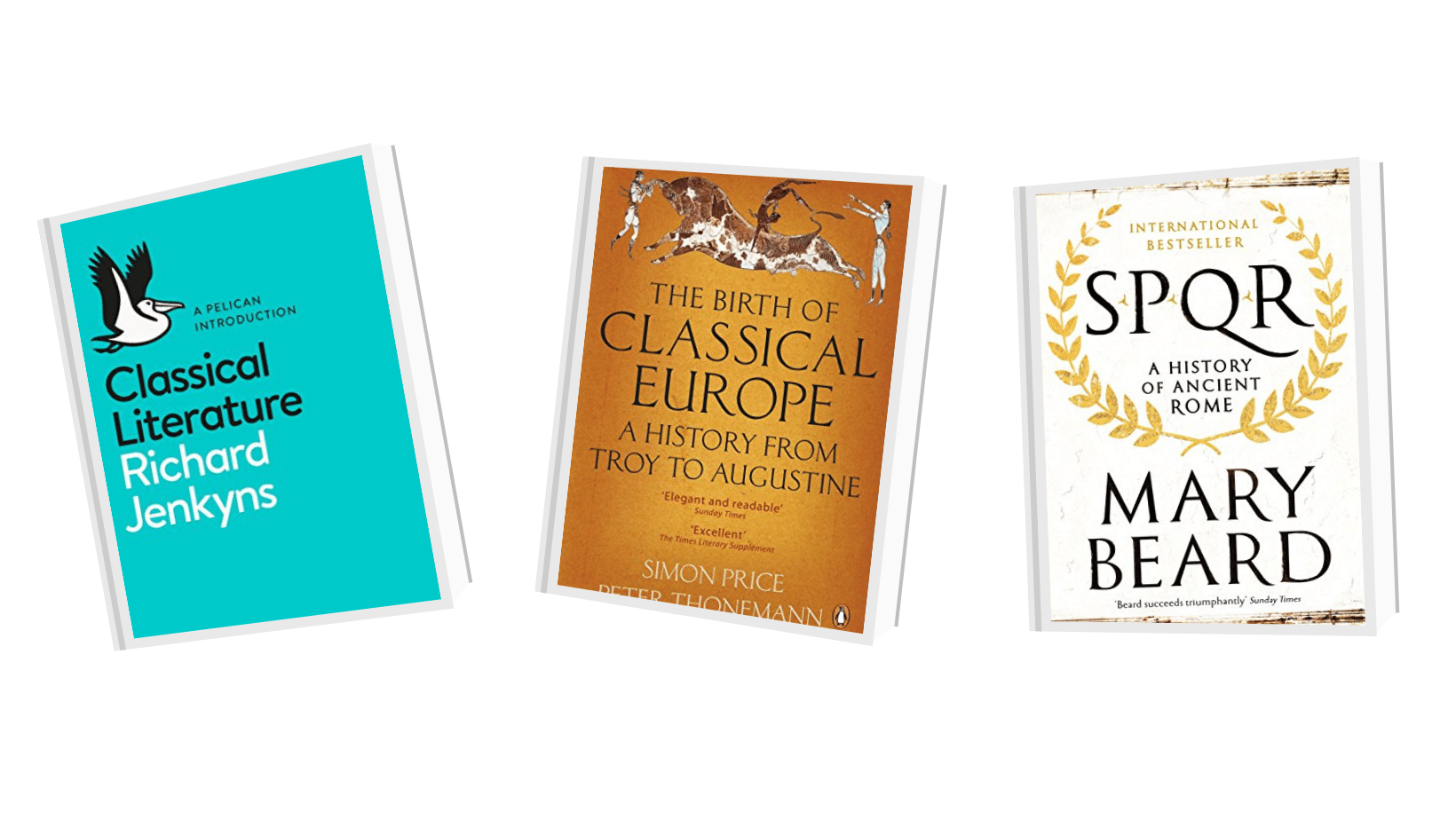
● Classical Literature A Pelican Introduction (2015), Richard Jenkyns: Examines key Classical authors and genres in short chapters which can help identify what interests you most
● SPQR: A History of Ancient Rome (2015), Mary Beard: a good overview of Roman history spanning 1000 years, a great and accessible introduction if you haven’t studied Roman history before
● The Profile History of the Ancient World Series, various authors: take you through the history of ancient Rome (and Greece less so) right up to Late Antiquity, including material evidence (n.b. Check the time-span of the degree you’re interested in)
● The Birth of Classical Europe: A History from Troy to Augstine (2011), Simon Price & Peter Thonemann: considers how our understanding of and relationship with the ancient past is reflected and shaped by the ancients own interaction with their past
Exhibitions, Podcasts and Independent Study
A strong Classics application also shows engagement beyond books.
You might explore:
The British Museum (London) — world-class classical collections
Fishbourne Roman Palace (West Sussex) — Roman mosaics in Britain
BBC Radio 4 In Our Time (Classical episodes)
Historia Civilis (YouTube) — concise historical explanations
These resources help demonstrate genuine enthusiasm for the ancient world.
Oxbridge Classics Interview Tips
You may be asked to:
Analyse a passage or image
Discuss ideas spontaneously
Consider alternative interpretations
Respond to unfamiliar material
Key advice:
Speak your thoughts aloud clearly
Do not worry about being “wrong”
Focus on reasoning, not memorisation
Engage with the material actively
Example Interview Questions:
What is missing from Classics?
Should we still study Classics given its association with slavery and violence?
What is the use of dead languages?
These questions test your ability to think critically and respond thoughtfully.
For more information on preparation for Oxbridge Classics interviews, check out our Classics Interview Preparation guide. Gain insights into the Oxbridge Classics interview process from previously successful candidates, discover the different formats of interview and top tips on how to approach and structure your responses from U2’s Oxbridge Classics tutors.
How U2 Can Support Your Classics Application
Are you uncertain about what to expect in your Oxbridge Classics interviews?
The thought of these interviews can be intimidating and difficult to prepare for, given their unpredictability. However, they play a crucial role in the admissions process.
This essential guide, crafted by U2’s Classics tutors—graduates from Oxford and Cambridge—will walk you through how to prepare effectively. It offers tips on how to stand out, present yourself confidently, and communicate clearly during the interview.
Key Features of U2 Tuition’s Classics guide:
The first section of our 23-page guide is focused on helping you build evidence of wider subject exploration, demonstrating your passion and motivation for Classics. Our expert graduates recommend what to read, both primary and secondary materials, and how to reference key texts or online resources (such as podcasts) to support your reasoning in interview answers. Each recommendation is paired with a thinking task—an interview question directly linked to the content of the text. We advise starting this process a few months before your interviews to allow ample time for thorough exploration of the material.
Guidance on how to prepare for personal-statement-based interview questions.
Insights into what to expect during your academic interviews, featuring accounts from successful Classics candidates. These firsthand stories provide details on the interview process, specific questions asked, and tips for preparing for different interview formats, including personal statement discussions, general interviews, literature interviews, and combined history and philosophy interviews.
Four in-depth worked-through interview questions, complete with clues for answering and additional suggested readings on the relevant topics.
A collection of 40 additional past interview questions covering a wide range of topics, including the contemporary relevance of Classics, Roman and Greek literature and history, philosophy, and art and archaeology.
Final tips for success in your interview.
Interested in more personalised Oxbridge Classics mentoring to enhance your independent preparation?
A Classics tutor is a great support for your Oxbridge application. U2 has a brilliant team of Classics tutors keen to help you throughout the application process. A Classics tutor can help you delve into key topics, support personal statement writing, and assist with CAT test and interview preparation. Book a free consultation here for more information and to discuss your Oxbridge Classics application.
We also offer mock interview days in November/December. Learn more here.
Personal Statement Coaching
U2’s Oxbridge-educated mentors have a close insight into what admissions tutors like to see in a Classics personal statement, and can help students to convey their skills, motivations, and long term goals, in order to stand out from other applicants. The statement should be the candidates own work, but our mentors will provide direction and guide you through the process of content building and writing. We offer offline drafting as well as tuition sessions.
Oxbridge Classics Mentoring
U2 offers CAT admissions test preparation, as well as wider Oxbridge Mentoring programmes (book a free consultation to discuss options). We have a large team of Oxbridge-educated Classics mentors including 1st Class, Master’s and PhD level graduates.
The Process:
1) We suggest an Oxbridge Classics graduate as a tutor and send their full CV for review. Our tutors are deeply familiar with the admissions process to study Classics and related degrees at the University of Oxford and Cambridge, and are well-placed to guide you through personal statement curation, the entrance exam and the interview process. We may suggest a range of application tutors to choose from with slightly differing rates depending on qualifications and level of experience.
2) We typically suggest beginning with a 1.5 hour informal assessment/ taster session, where the tutor will informally assess the student’s current performance level for application, including test and interview. Following this, we issue a report with feedback, and structure a plan to best prepare.
3) U2’s approach for regular Classics application sessions: The main focus of tutorial sessions will be to explore material that can be discussed in the personal statement and at interview - this may sometimes stretch from A-Level standard to First Year Undergraduate. Tutors ensure each student refines their interests within Classics and is exposed to a range of approaches and new concepts, guiding students in their reading and wider subject exploration. Together, we build a case for the student, solidifying the stance and direction they will take during interview and honing skills for the admissions test if applicable.
Frequency of sessions can be decided between student and tutor. Students can take either ad hoc sessions, or we structure a full programme for preparation, which may include further co-curricular opportunities such as our research projects, and Oxbridge mock interview days. Honing the skills necessary to succeed for Oxbridge ideally requires long-term preparation and mentoring presents a wonderful opportunity to learn from some of the very best Oxbridge has produced. We also provide GCSE, A-Level or IB Greek and Latin support if needed.