

Oxford BCL Guide: Entry Requirements, Application Tips & How to Get In
Applying for the Oxford BCL is highly competitive, with applicants expected to demonstrate exceptional academic ability and a strong foundation in Law. This guide explains how to apply for the Oxford BCL, including the entry requirements, application deadline, personal statement and written work, as well as BCL modules, fees, funding and what studying the course is actually like. We also look at Oxford BCL vs the Cambridge LLM and offer practical advice on building a competitive application.
Contents
What Is the Oxford BCL?
The Oxford Bachelor of Civil Law (BCL) is a 10-month, full-time postgraduate Law degree offered by the University of Oxford. Despite its name, the BCL is an advanced master’s-level qualification, designed primarily for high-achieving Law graduates from common-law jurisdictions. Oxford describes the academic standard as significantly higher than that of a first Law degree such as an LLB, BA or JD.
The BCL is academically intensive. Rather than revisiting undergraduate Law, students engage with complex questions in law and legal theory, with an emphasis on independent analysis, argument and advanced legal scholarship. Teaching combines seminars with Oxford’s distinctive small-group tutorial system, where typically two to four students discuss their ideas and written work directly with a tutor.
Oxford BCL vs MJur: What Is the Difference?
The Oxford BCL and Magister Juris (MJur) are closely related postgraduate Law degrees. The principal distinction is the applicant’s legal background: the BCL is designed for students from common-law backgrounds, while the MJur is the corresponding programme for students from civil-law backgrounds.
BCL and MJur students share most of the same course content and generally study their options together. This means the distinction is primarily about the legal background from which students enter Oxford, rather than one course being a higher-level qualification than the other.
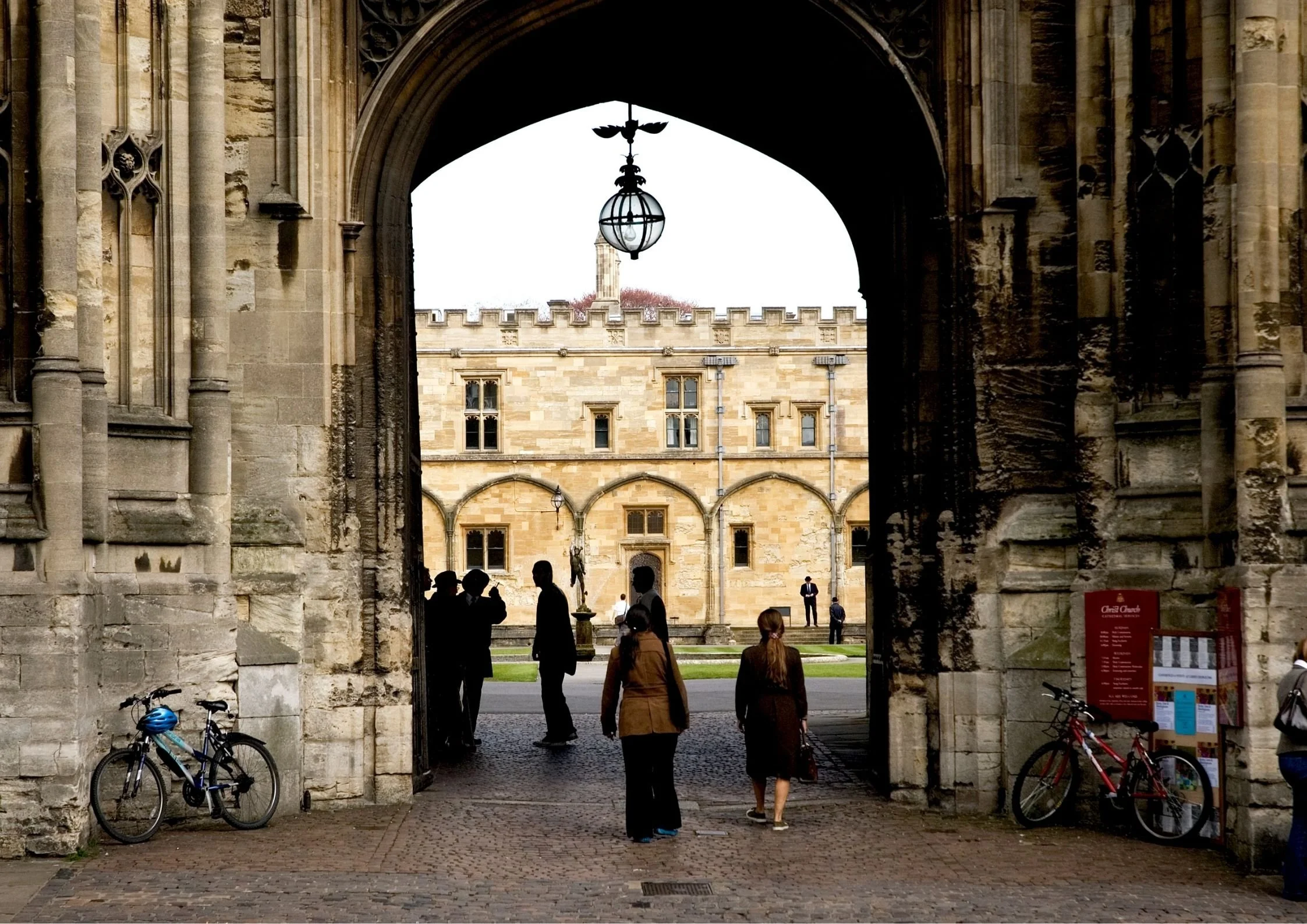
The Oxford BCL combines advanced postgraduate Law study with the wider experience of life at the University of Oxford. BCL students are members of both the Faculty of Law and an Oxford college, becoming part of a postgraduate academic community that extends beyond the classroom. Considering applying? Explore our Oxford BCL application support for expert, one-to-one guidance throughout the process.
Oxford BCL Entry Requirements
The Oxford BCL entry requirements are academically demanding. For 2027-28 entry, Oxford states that applicants should normally hold, or be predicted to achieve, a First-Class undergraduate degree with honours in Law, or an equivalent international qualification. Oxford also makes clear that entry to the Bachelor of Civil Law is very competitive, so meeting the minimum academic requirement does not in itself guarantee admission.
The BCL is primarily an academic programme. Oxford assesses applicants principally on evidence of academic excellence and potential, rather than placing significant weight on professional legal experience.
What Grades Do You Need for the Oxford BCL?
For UK applicants, the standard Oxford BCL academic requirement is a First-Class undergraduate degree in Law. You can also apply while completing your undergraduate degree if you are predicted to achieve a first.
Your academic record forms part of a wider application that includes your transcripts, academic references and legal written work. Applicants should therefore avoid approaching the BCL as a simple grades exercise. A competitive application needs to demonstrate that you are prepared for the advanced legal analysis, independent thinking and academic intensity of the course.
Oxford BCL Entry Requirements for International Students
International applicants to the Oxford BCL are expected to demonstrate an academic standard equivalent to a UK First-Class degree in Law.
For applicants with a degree from the United States, Oxford currently states that the minimum overall GPA normally required to meet the BCL’s undergraduate-level requirement is 3.7 out of 4.0. Applicants from other countries should use Oxford’s International Qualifications guidance to check how their degree and grades compare with the UK requirement.
Oxford BCL English Language Requirements
The BCL requires Oxford’s Higher level of English-language proficiency. Applicants who are required to demonstrate their English currently need, for example, an IELTS Academic score of at least 7.5 overall, with at least 7.0 in each component. Oxford also accepts specified alternative qualifications, subject to its current requirements.
How to Apply for the Oxford BCL
The Oxford BCL application is submitted online through the University of Oxford’s graduate admissions system. Applicants need to complete the application form and provide supporting documents including academic transcripts, references, a CV, a personal statement and a sample of legal written work. BCL applicants are not normally interviewed, so the written application provides the principal evidence on which Oxford assesses your suitability for the course.
For 2027–28 entry, the Oxford BCL application deadline is 12:00 midday UK time on 27 January 2027. It is worth preparing well in advance: arranging academic references and selecting your written work can take considerably longer than completing the application form itself.
Oxford BCL Application Checklist
A complete Oxford BCL application currently requires:
An online Oxford graduate application
Official academic transcripts
Three referees
A CV or résumé
A personal statement of no more than 300 words
One piece of legal written work of no more than 2,000 words
English-language evidence where required
When Should You Start Your Oxford BCL Application?
Although the deadline falls in January, it is sensible to start your Oxford BCL application several months earlier. This gives you time to request transcripts, approach referees, choose your written work and develop your 300-word personal statement.
The written work deserves particularly early attention. Rather than simply choosing the essay with your highest mark, consider which piece best demonstrates the qualities Oxford is looking for in an advanced Law student, including legal analysis, argument and clear academic writing.

U2 Tuition offers personalised, one-to-one support for students applying to competitive postgraduate programmes such as the Oxford BCL and Cambridge LLM. U2 tutors can tailor sessions to each applicant, from choosing courses and strengthening application materials to preparing personal statements and written work.
How to Write the Oxford BCL Personal Statement
The Oxford BCL personal statement is a short, academically focused statement explaining why you are applying for the BCL, your relevant academic background and experience, and the areas of Law that particularly interest you.
Oxford explicitly states that the personal statement generally carries less weight than your academic qualifications, references and submitted written work in the Law Faculty’s assessment. This means the aim is not to compensate for the rest of your application with an unusually creative statement. Instead, it should give the admissions team a concise and convincing account of your academic interests and reasons for pursuing the BCL.
A strong BCL personal statement should leave the reader with a clear sense of what you are interested in academically, how those interests have developed and why the BCL is the appropriate next stage of your legal education.
Common Oxford BCL Personal Statement Mistakes
One of the biggest mistakes is trying to fit too much into 300 words. A list of modules, internships, mooting competitions, societies and career ambitions leaves little room to explain why any of them actually matter.
Other common problems include spending too much space praising Oxford, making broad claims about a “passion for Law”, repeating grades already visible on the transcript, or discussing professional experience without connecting it to future academic achievement. Oxford’s Law Faculty states that non-academic interests and professional experience are relevant to admissions only insofar as they reveal something pertinent to future academic performance.
Oxford BCL References and CV
Oxford BCL References
Oxford requires three referees, with academic references strongly preferred, while the compulsory CV provides a concise overview of your academic achievements and relevant experience.
For the BCL in particular, the emphasis should remain academic. Oxford describes the programme as an advanced academic Law degree and states that professional legal positions are not usually a consideration in admissions in their own right.
The strongest Oxford BCL referees are academics who know your work well enough to provide an informed assessment of your academic ability and suitability for advanced postgraduate Law study. A professor who has taught or supervised you closely may therefore be more useful than a more senior academic who barely knows your work. Oxford states that references are used to support assessment of your intellectual ability, academic achievement and motivation.
Oxford BCL CV
A CV or résumé is compulsory for the Oxford BCL. Oxford notes that most applicants submit a document of one to two pages, highlighting their academic achievements and any relevant professional experience.
The CV should complement rather than duplicate the rest of your application. Your transcript already provides a detailed record of your grades, while your personal statement explains your motivation and academic interests. Use the CV to give Oxford a clear, concise overview of your academic profile and relevant experience.
Oxford does not impose a specific BCL CV page limit, but states that most applicants submit one or two pages.
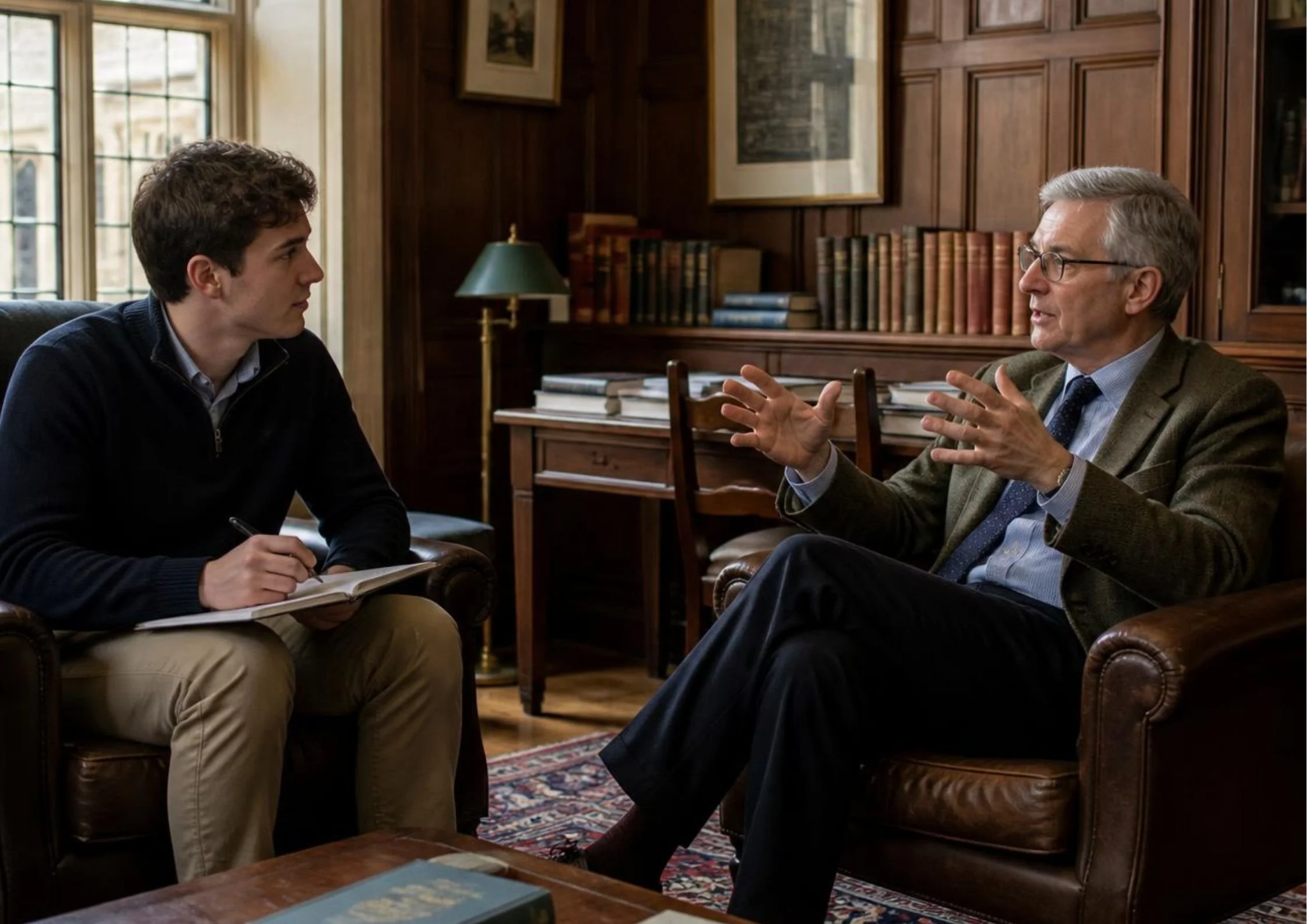
Academic references are an important part of the Oxford BCL application, with Oxford strongly preferring referees who can comment on your academic ability. Where possible, choose academics who know your work well and can provide specific evidence of your legal analysis, written work and potential for advanced postgraduate study, rather than selecting a referee based on seniority alone.
What Is Studying the Oxford BCL Actually Like?
Studying the Oxford BCL is academically intensive and highly independent. The 10-month course combines extensive reading and independent study with interactive seminars and Oxford’s distinctive small-group tutorials. Oxford describes the BCL as significantly more advances than a first Law degree, with students expected not simply to learn legal rules but to engage critically with difficult questions in Law and legal theory.
The workload reflects this. Oxford advises BCL students to expect at least 45 hours of study each week during term, with roughly four hours of independent study for every hour of teaching. Some further study is also expected during the vacations.
How Is the Oxford BCL Structured?
There are no compulsory modules on the Oxford BCL, which gives students considerable freedom to shape the course around their academic interests. Students currently choose one of the following combinations:
Four full options,
Three full options and two half-options, or
Two full options and four half-options
A full option generally runs across two or three terms, while a half option is completed within one term. Students may also apply to replace one full taught option with a dissertation.
What Modules Can You Study on the Oxford BCL?
The Oxford BCL modules, which Oxford generally refers to as options, cover a broad range of legal fields. The precise selection changes from year to year, so applicants should check the current Faculty list rather than assuming that a particular option will be available.
Recent options include Competition Law, Corporate Finance Law, Commercial Remedies, International Human Rights Law, AI and Data Law and Comparative Corporate Governance, among many others.
What Is the Oxford BCL Workload Like?
The BCL is deliberately demanding. Over a relatively short 10-month course, students are expected to manage advanced legal reading, seminars, tutorial essays and preparation for final assessments simultaneously. Oxford expects at least 45 hours of study per week during term and describes the course as requiring substantial intellectual independence.
For prospective students, this is one of the most important differences between simply meeting the Oxford BCL entry requirements and being well suited to the course itself. Strong grades matter, but the experience of studying the BCL also rewards students who genuinely enjoy reading extensively, testing legal arguments and discussing difficult questions in considerable depth.

Independent study forms a significant part of the Oxford BCL, alongside seminars and small-group tutorials. Students are expected to work through extensive reading lists, develop their own legal arguments and prepare for demanding discussions and assessments. This emphasis on independent academic work makes the BCL particularly suited to students who enjoy engaging critically with complex areas of Law.
Oxford BCL Fees, Funding and Scholarships
The cost of the Oxford BCL depends on whether you are classified as a Home or Overseas student. Alongside the BCL course fee, applicants should budget for accommodation and other living costs in Oxford. A range of Oxford BCL scholarships and funding opportunities are available, but graduate funding is competitive and should be researched alongside your application rather than after receiving an offer.
For 2027-28 entry, Oxford lists the annual BCL course fees as £34,850 for home students and £52,630 for overseas students.
These fees cover tuition and the academic services and facilities provided by the University. They do not include accommodation, food or general living expenses. The BCL has a standard fee liability of one academic year. In addition to Oxford BCL tuition fees, you need to budget for living in Oxford for the duration of the course. For 2027–28, Oxford estimates that a single full-time graduate student will typically need around £1,475 to £2,175 per month for living costs.
Clarendon Scholarships for the Oxford BCL
The Clarendon Fund is one of Oxford’s major graduate scholarship schemes. Clarendon offers more than 200 new fully funded scholarships each year and is open to eligible graduate applicants across subject areas and nationalities. Scholarships cover course fees in full and provide a grant towards living expenses for the relevant period of fee liability.
You do not submit a separate Clarendon application. BCL applicants who submit their graduate application by the relevant January course deadline are automatically considered, with selection based on outstanding academic merit and potential.
How Do You Apply for Oxford BCL Scholarships?
For the majority of Oxford graduate scholarships, there is no separate scholarship application. If you submit your BCL application by its January deadline, Oxford will automatically assess you against the eligibility criteria for relevant scholarships.
However, some Oxford scholarships require a separate application or have additional eligibility requirements. You should therefore use Oxford’s Fees, Funding and Scholarship Search before submitting your BCL application rather than assuming that every scholarship is automatic.
Oxford BCL vs Cambridge LLM
| Oxford BCL | Cambridge LLM | |
|---|---|---|
| Qualification | Bachelor of Civil Law (BCL) | Master of Law (LLM) |
| Level | Postgraduate, master's-level | Postgraduate Master's degree |
| Length | 10 months | 9 months |
| Academic requirement | Normally a First-Class undergraduate degree in Law or equivalent | Normally a First-Class undergraduate degree in Law or equivalent |
| Course structure | Flexible combination of full and half-options | 4 advanced Law courses |
| Teaching | Seminars, tutorials or small-group teaching, and extensive independent study | Lectures, seminars and extensive independent study |
| Course choice | Around 35 full options plus approximately 10 half-options in a typical year | Around 30 LLM courses in recent years |
| Personal statement | Maximum 300 words | Reasons for Applying statement, maximum 5,000 characters |
| Written work | One piece of legal written work, maximum 2,000 words | No separate academic writing sample normally required |
| References | 3 referees; academic references strongly preferred | 2 references |
| Assessment | Predominantly end-of-year examinations, with some options assessed through submissions | Generally end-of-year examinations |
| Dissertation | A 10,000–12,500-word dissertation can replace one full taught option, subject to approval | May replace the examination for one course where a dissertation option is offered, subject to approval |
| Typical application deadline | January | December |
How U2 Tuition Can Help With Oxford BCL Applications
U2 Tuition offers one-to-one postgraduate Law application support for students applying to highly competitive programmes such as the Oxford BCL and Cambridge LLM. Applicants can work with experienced Law tutors and postgraduate mentors to develop a clear application strategy and strengthen each element of their application while ensuring that the final work remains their own.
Support can be tailored to your individual application, whether you are deciding if the BCL is the right course for you or preparing your personal statement, written work, CV and references.
Oxford BCL Application Strategy
A strong Oxford BCL application begins with an honest assessment of your academic profile and how the different parts of your application fit together.
A U2 tutor can help you understand the BCL admissions criteria, plan your application timeline and identify where to focus your preparation. This might include considering your academic interests, choosing appropriate referees, deciding which piece of written work to submit and ensuring that your CV and personal statement complement rather than repeat one another.
For applicants considering several postgraduate Law programmes, sessions can also explore the differences between courses such as the Oxford BCL and Cambridge LLM and how your application should be adapted for each.
Oxford BCL Personal Statement Support
With only 300 words available for the Oxford BCL personal statement, there is very little room for generic discussion. Your statement needs to communicate your academic interests and motivation clearly and concisely.
U2 tutors can provide detailed feedback throughout the writing process, helping you decide what deserves space, develop a coherent structure and make your reasoning more specific. The aim is not to write the statement for you, but to help you communicate your own academic interests, experience and motivation as effectively as possible. U2’s wider admissions approach similarly focuses on tailored one-to-one support with application materials rather than a generic template.
Oxford BCL Written Work Support
Your Oxford BCL written work provides direct evidence of your ability to analyse legal questions and construct an academic argument, making the choice of submission particularly important.
A U2 tutor can help you compare potential pieces of existing academic work and consider which best demonstrates your strengths. Feedback can also focus on the clarity of your argument, organisation and legal analysis while respecting Oxford’s rules on submitted work and ensuring that the ideas and writing remain your own.
Oxford BCL Frequently Asked Questions (FAQs)
How competitive is the Oxford BCL?
The Oxford BCL is highly competitive. Oxford currently reports an average of around 720 BCL applications per year, while approximately 150 places are available across the BCL and MJur combined.
Is the Oxford BCL a Master’s degree?
Yes. Despite being called the Bachelor of Civil Law, the Oxford BCL is a master’s-level postgraduate Law degree. The unusual title is historical and does not mean that the BCL is an undergraduate qualification.
What grades do you need for the Oxford BCL?
Oxford normally requires a First-Class undergraduate degree with honours in Law, or an equivalent international qualification. Meeting this minimum requirement does not guarantee admission, as Oxford states that entry to the BCL is very competitive.
How do you apply for the Oxford BCL?
You apply for the Oxford BCL through Oxford’s online graduate application system. The application includes official academic transcripts, three referees, a CV, a personal statement of no more than 300 words and one piece of legal written work of no more than 2,000 words.
How is the Oxford BCL assessed?
Most Oxford BCL options are assessed through timed examinations at the end of the course, although some options instead use assessed essays completed over a longer period. The exact form of assessment depends on the options you choose.
Is there an interview for the Oxford BCL?
Oxford BCL applicants are not normally interviewed. Admissions decisions are therefore primarily based on the submitted application, including academic performance, references and written work.