

How to Get Into the Royal Veterinary College: Expert Admissions Advice
Why Study Veterinary Medicine at the Royal Veterinary College?
Royal Veterinary College (commonly called RVC) stands out amongst other UK veterinary schools for several reasons.
Teaching style
RVC follows a spiral curriculum rather than a traditional block curriculum.
Key topics are revisited throughout the course, with each year building on knowledge from the previous one, strengthening their understanding as they progress.
The first two years are pre-clinical, covering core sciences such as anatomy and physiology and helping students understand what a healthy animal should look like and how it functions.
In the final three years, the focus shifts to disease, pathology, and clinical medicine.
Understanding normal anatomy and physiology makes it much easier to recognise and interpret abnormalities later on.
Clinical Exposure
Unlike many veterinary schools in the UK, the Royal Veterinary College has extensive clinical facilities on site.
The Hawkshead Campus provides students access to an equine first-opinion and referral centre and a large small-animal referral hospital.
The Queen Mother Hospital for Animals is internationally recognised, with highly respected specialist clinicians and one of the largest veterinary trauma centres outside North America
The Camden Campus offers a first-option practice, which includes an exotics department, giving students exposure to a wide range of species and cases.
All teaching is done by internationally recognised clinicians, who, combined with the facilities, ensure their clinical exposure is first-rate.

Research Reputation
The RVC has a strong international reputation for veterinary research and is widely recognised as one of the leading institutions in the field.
TheQS World Rankingshas frequently placed it first for Veterinary Science over the years.
It is a research-led institution, with around 88% of its research rated as “world-leading” or “internationally excellent” in the UK’s Research Excellence Framework (REF).
Location and Student Experience
The Royal Veterinary College is split across two campuses: one in central London (Camden) and the other in Hertfordshire (Hawkshead), which are about a 20-minute train journey apart.
Students typically spend their first two years at the Camden campus, which is an exciting place to begin your studies, especially if you’ve just moved to London.
Student life is both supportive and rewarding.
The course is challenging, but there is a strong sense of community among students, staff, and clinicians.
The relatively small cohort sizes mean you get to know your peers well, and there is a collaborative atmosphere where students often support each other through the demands of the course.
There are also many student societies, sports clubs, and social events organised through the RVC Students’ Union, giving students plenty of opportunities to unwind outside of their studies.
Unsure where to apply to read Veterinary Medicine? Our expert tutors, educated at the UK’s leading Veterinary Science Universities can offer personalised advice and application support. Book a complimentary 20-minute consultation to learn more about our bespoke application support.
Royal Veterinary College Entry Requirements
Applicants are expected to achieve strong academic results, particularly in science subjects.
A typical A-level offer is AAA
This must include Biology and Chemistry, as these subjects form the scientific foundation for much of the veterinary curriculum.
There’s no preference for a particular third subject.
GCSE grades should also be strong. Applicants require:
at least a grade 7 in science subjects and grade 6 in Mathematics and English Language.
Applicants must also complete a work experience form.
Along with details of work experience, there are supplementary questions that give applicants the opportunity to expand on their experiences, motivations, and understanding of the veterinary profession.
In recent years, the RVC has placed greater emphasis on this form and the additional questions rather than the traditional personal statement, so applicants should take time to answer these questions thoughtfully and demonstrate insight into the realities of the profession.

How Competitive Is RVC Veterinary Medicine?
How selective is the course?
Admission is very competitive.
Veterinary medicine is a highly sought-after course, and RVC receives thousands of applications each year for only a limited number of places, with some estimates suggesting around a 13% acceptance rate.
A strong application is therefore paramount.
What kinds of students tend to receive offers?
Strong applicants are very academically strong, but academics alone is not enough.
The RVC look for well-rounded students who not only have a genuine interest in veterinary medicine but also have a strong motivation and work ethic.
Key qualities include strong communication, teamwork skills, and a keenness to get involved in all aspects of university life.
Are there particular qualities or experiences that successful applicants share?
Applicants who receive offers have a strong curiosity about animal health and welfare, and the ability to reflect on their experiences.
Good applicants can show that they understand the realities of the profession.
Our RVC educated tutors can help you ensure your Veterinary Medicine application stands out amongst the competition. Get in touch today to learn more about our support or begin your journey.
Work Experience for Veterinary School Applicants
Applicants must fill out a work experience form to allow the RVC to understand the range of animal-related experiences applicants have gained
This can include placements in veterinary practices, farms, stables, shelters, or other animal care environments.
Importantly, the focus is not simply on the type or number of placements completed, but on what applicants have learned from those experiences and how they reflect on them.
What kinds of experience are most valuable?
There isn’t a preference for experience, as long as you meet the quota for non-clinical and clinical work experience.
A student who has worked with lions in South Africa is considered just the same as someone who has spent time helping at their local petting farm.
What matters most is what you took away from the experience and how you reflect on what you learned.
Is diversity of experience important?
Yes, having a range of experiences can be helpful.
Seeing different areas of animal husbandry such as small animal practice, farms, stables, or rescue centres can give you a broader understanding of the profession, the different roles vets play and the people that you will work alongside as a vet.
Remember, the most important thing is not how many placements you complete, but what you learn from them.
How can students demonstrate genuine commitment to veterinary science?
Genuine curiosity in animal welfare and current affairs in the veterinary profession in the UK.
Strong applicants have interests in topics in the field that excite them or that have caught their interest after seeing a case on work experience.
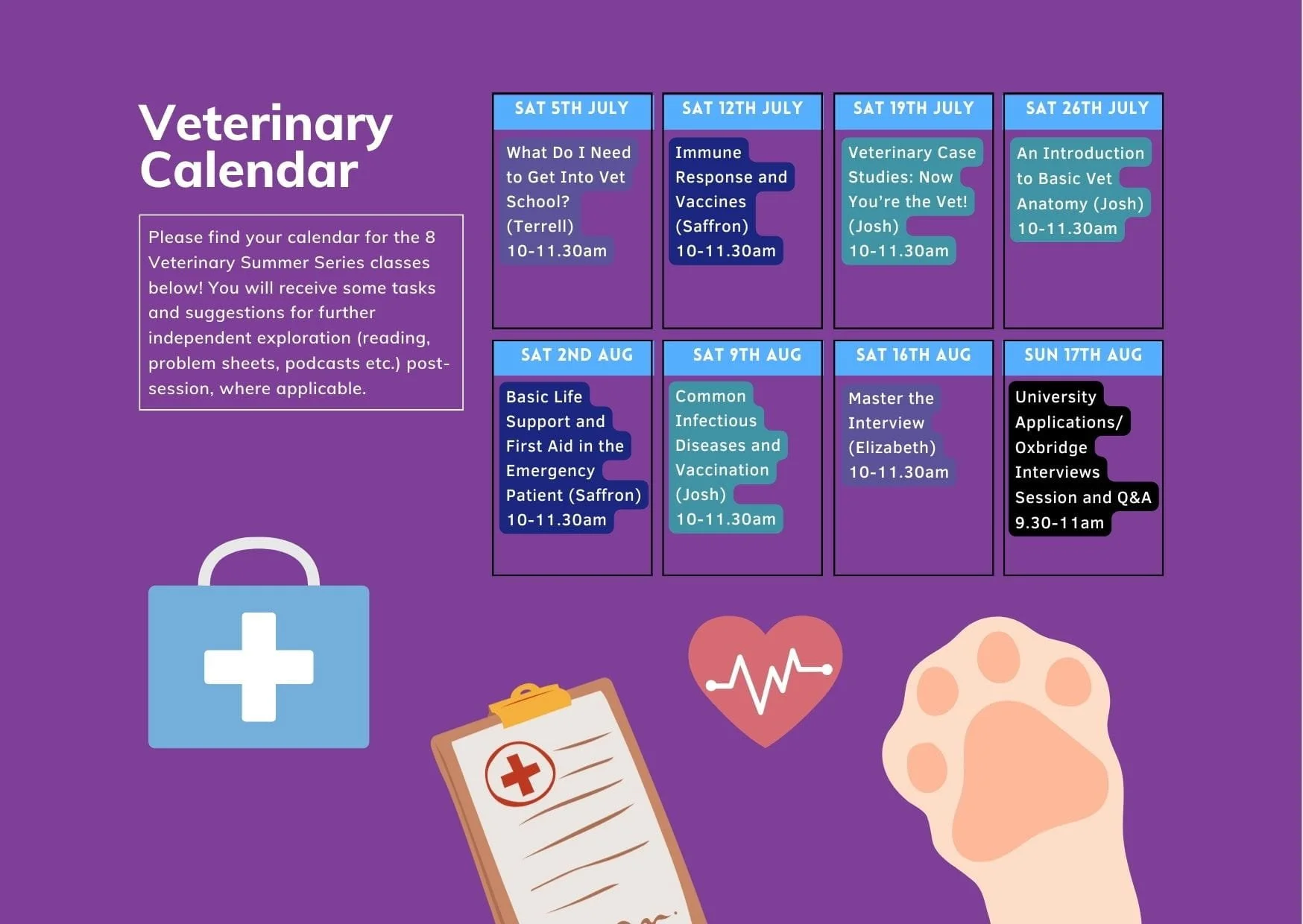
Unsure if Veterinary Medicine is for you? Check out Minds Underground Veterinary Summer School – an interactive, 8-week online course designed to expose students to Veterinary Science as a degree, offer application tips, including work experience advice, and provide super-curricular application support.
The Royal Veterinary College Admissions Process
UCAS application
Applications are submitted through UCAS, and for veterinary medicine, the deadline is typically mid-October, earlier than many other university courses.
As part of the UCAS application, students submit their predicted grades, educational history, and personal statement.
You can only apply to 4 vet schools, so it is important to narrow down which other universities you would like to apply for, alongside RVC.
Personal Statement
The personal statement traditionally allowed applicants to explain their motivation for studying veterinary medicine and reflect on their work experience.
However, in recent years, the RVC has placed less emphasis on the personal statement and instead focuses more on the work experience form, which applicants complete separately.
Remember that all the universities you apply to will have access to your personal statement, so do not show bias or preference for a specific university.
You should still put a lot of time and effort into your personal statement.
The personal statement should be 90% work experience and academic calibre, and 10% other interests.
Check out some of our guidance on the new personal statement format and our top tips for Veterinary School personal statements.

Interviews
The RVC interviews hundreds of applicants from the UK, the US and Asia; therefore, the competition is strong.
Interviews are offered to exceptional candidates who have passed the predicted grades and work experience screenings.
These are Multiple Mini Interviews (MMIs), where applicants rotate through a series of short stations.
The aim is not only to assess academic ability, but also communication skills, ethical reasoning, problem-solving, and an applicant’s understanding of the profession.
Tips for the MMI can be found in our Veterinary Science Interview Preparation Guide.
Timeline of the Process
After the October UCAS deadline, work experience forms are reviewed, and interviews are typically held between November and early spring.
Offers are usually released from spring, with final decisions made before the UCAS deadline.
Overall, the admissions process aims to identify applicants who not only have strong academic ability but also demonstrate insight into the profession, resilience, and genuine motivation to pursue veterinary medicine.
Looking for support with any of the application stages? Here at U2 Tuition we have Veterinary Science students from all of the UK’s top courses, including RVC, who can support with work experience queries, MMI, and more. We tailor our support to your unique application and the UK veterinary schools you’re targeting. Let us make your RVC admissions journey easier – book a consultation today!
Expert Tips for a Successful RVC Application
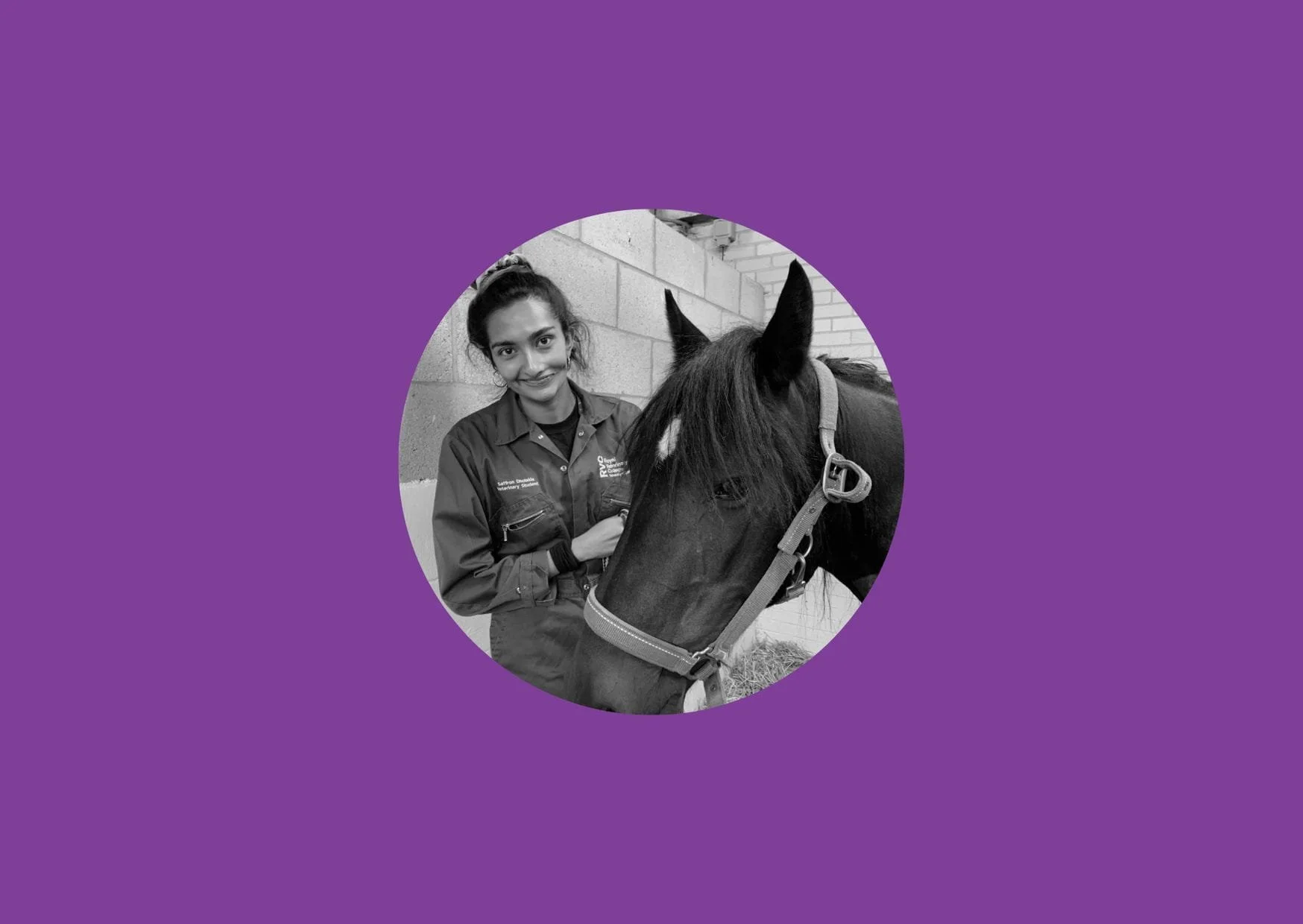
Written by Saffron
RVC graduate and U2 Tuition Veterinary Medicine Admissions Mentor
If you’re hoping to study veterinary medicine at the RVC my biggest advice would be to start exploring the profession early. Try to gain a range of animal-related experiences, whether that’s in clinical practice, farms, stables, rescues or other animal care environments. The key is not simply viewing placements as a tick box exercise but taking the time to reflect on what you learnt and thinking about how those experiences shape your understanding of the profession.
A common mistake applicants make is focusing only on turning up for work experience rather than developing a genuine understanding of what veterinary work involves. Admissions teams are looking for students who understand both the rewards and challenges of the profession, including the emotional, physical, and communication aspects of the job.
Preparing for interviews is also important. Many veterinary schools, including the RVC, use Multiple Mini Interviews (MMIs), which assess communication skills, ethical reasoning, and how you think through problems. Practising speaking about your experiences, discussing cases you have seen, and staying up to date with current topics in the vet world can be very helpful.
Academically, strong grades in science subjects are essential, particularly in Biology and Chemistry. Developing good study habits early in Year 11 and Year 12 can make a big difference, as the academic expectations for veterinary courses are high.
Finally, remember that the admissions process is not about finding the “perfect” applicant. What really stands out are students who are curious and genuinely passionate about the impact you can have as a vet. Showing insight into the profession and being able to explain why veterinary medicine is the right path for you will strengthen your application significantly.
Book your free consultation to learn more about the personalised support a tutor like Saffron can offer.