

Westminster Under School 4+ Entry: Admissions & Assessment Guide
Westminster Under School 4+ entry point gives children the opportunity to join the school in Reception. For families considering Westminster Under School 4+ entry, understanding what the admissions process is designed to assess is an important first step. In this guide, our school admissions team explains how the Westminster Under School 4+ works, what the school is looking for in prospective pupils, what families cna expect from the assessment process and how parents can develop the underlying skills that help children approach selective school admissions with confidence!
Content:
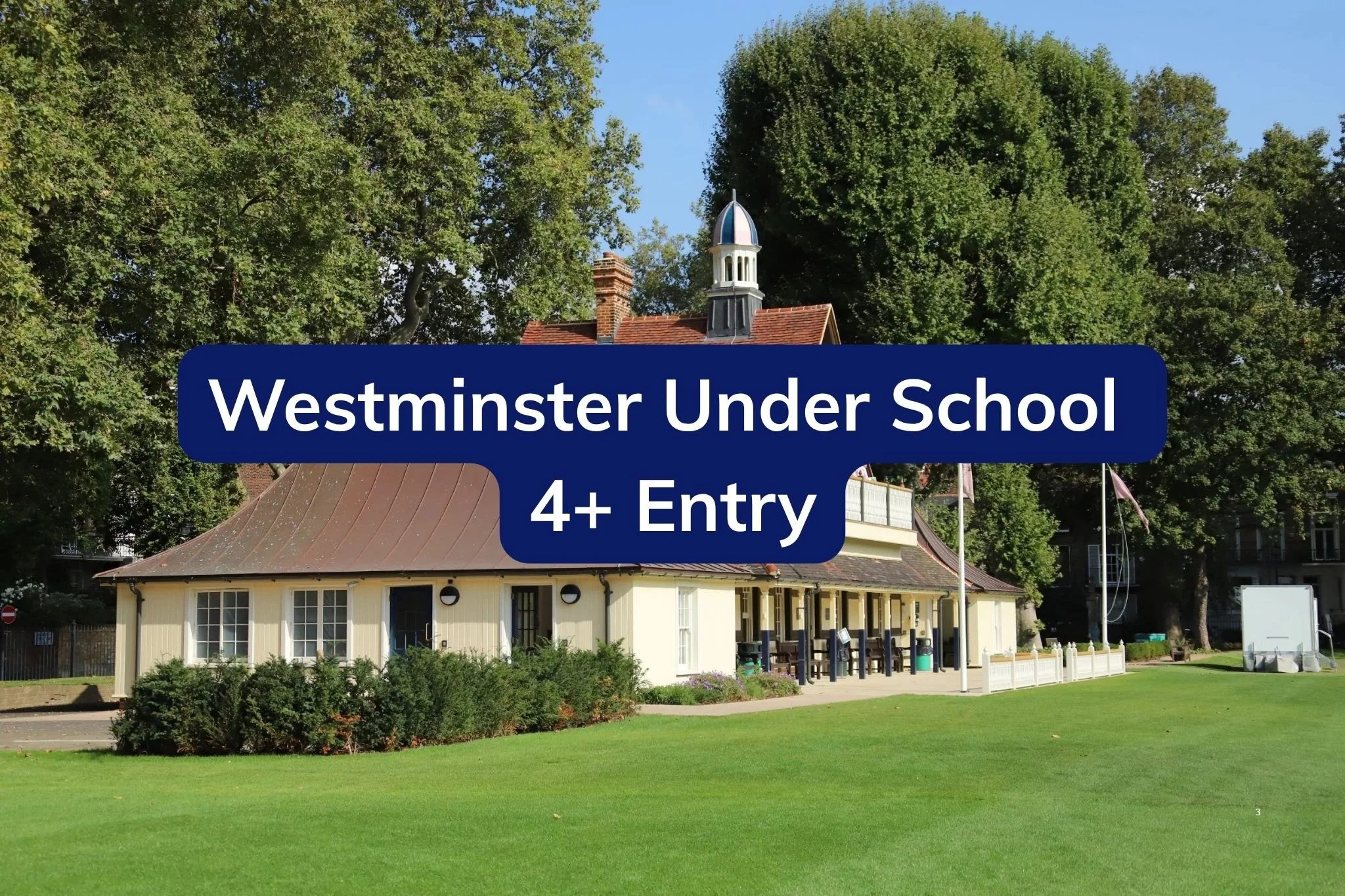
Westminster Under School 4+ Entry
What does Westminster Under School look for in a 4+ pupil?
What happens in the Westminster Under School 4+ Assessment?
How should you prepare for Westminster Under School 4+?
What should you avoid when preparing for the Westminster 4+?
Westminster Under School 4+ Fees
Westminster Under School 4+ Entry: Frequently Asked Questions
U2’s Approach to Westminster Under School 4+ Preparation
Westminster Under School 4+ Entry
Westminster Under School's 4+ entry point allows children to join in Reception, beginning their Westminster education earlier than the school’s established entry points for older pupils.
Families interested in applying should register through Westminster Under School’s official admissions process.
Registration takes place well in advance of a child’s intended year of entry, so it is worth researching the school and familiarising yourself with the admissions process early.
However, there is an important caveat for parents considering applying: Westminster states that if it receives 500 applications, registration will close and a waiting list will open.
This means families who are confident that they would like their child to be considered shouldn’t necessarily wait until the September deadline to register.
4+ Entry Steps
Registration
The first step in the 4+ entry process is for a parent to register their child online from 1 September two years before their intended year of entry. Entrance assessment dates for 4+ entry in the following September are published in the Information Booklet by the end of March each year. If the school reaches 500 applicants, they will close registration and open a waiting list so being proactive pays off!
School Visit
To get a sense of what being a pupil at Westminster Under School is like, parents can book onto one of the 4+ Open Afternoons hosted each year in June and September. These events include a tour of the School.
Stay and Play Sessions
For stage one 4+ entrance assessments, Westminster Under School runs play-focused activities in the Autumn term that allow children to engage with members of the School team and other children.
Offer of a place
After the stage one assessment, some pupils will be invited back for stage 2 in January. Shortly after the second visit, the School will contact parents to let them know whether their child has been offered a place. Date of birth, EAL and proximity to the School will be factored into the decision-making process. The deadline for offer acceptance is usually the first half of the Lent term.
What does Westminster Under School look for in a 4+ pupil?
This is perhaps the most important thing to understand before preparing for Westminster Under School 4+ entry.
Westminster says that across its Under School entry points, it is looking for potential, alongside children with the natural ability to thrive within a Westminster education.
At four years old, that doesn’t mean arriving with an enormous vocabulary, completing advanced maths worksheets or being able to read chapter books.
In fact, trying to artificially accelerate a young child can miss the point of a 4+ assessment entirely.
At this age, schools are much more interested in understanding how a child thinks, communicates, listens, responds and engages.
For a Westminster 4+ candidate, we would therefore think about five broad areas.
Communication and comprehension
Can your child listen to an instruction and understand what they are being asked to do?
Can they express an idea clearly?
Can they answer a question about something they've heard or seen?
Can they sustain a short conversation with an unfamiliar adult?
Westminster's own guidance confirms that children entering at 4+ are assessed in an age-appropriate way that considers their comprehension and English-language development.
That makes everyday conversation incredibly valuable preparation.
Ask your child why they think something happened in a story. Ask them to describe their day. Let them explain the rules of a game to you.
The aim isn't to teach impressive answers. It's to help them become comfortable thinking and communicating independently.
Curiosity
Selective schools aren't looking for children who know lots of facts. They want to see children who are interested in the world around them and naturally want to find things out.
A curious child might notice an unusual detail in a picture, ask why the moon is visible during the day, wonder where an ant is going or want to know what a word means.
There’s no need to force it. The best thing you can do is give your child plenty of opportunities to notice things and follow their interests.
Museums, parks, cooking, building, drawing, stories and conversations can all become opportunities to ask:
“What do you notice?”
“Why do you think that happened?”
“What do you think will happen next?”
These kinds of conversations encourage observation and reasoning without turning preparation into formal tuition.
Early language and literacy
Reading together is one of the simplest and most useful things parents can do.
But don't make the mistake of focusing exclusively on whether your child can decode words.
The conversation around the book can be just as valuable.
After reading a story, try asking:
Who was your favourite character?
Why did they do that?
What happened at the beginning?
How do you think the character felt?
What do you think might happen next?
Can you find something unusual in this picture?
These questions develop comprehension, memory, sequencing, inference and expressive language!
Early mathematical thinking
At 4+, mathematical ability doesn't need to mean sitting down with pages of calculations.
Much of the most useful early maths happens naturally.
Count the strawberries you're putting into a bowl.
Share eight toys between two teddy bears.
Spot shapes while you're walking.
Build a tower and compare which block is longer or shorter.
Ask which plate has more grapes.
Play simple board games involving counting.
The aim is to help children become comfortable with numbers, patterns, quantities, shapes and simple problem-solving.
Independence and confidence
This is the area parents sometimes overlook.
A child may have an impressive academic vocabulary at home but find it difficult to engage when their parent isn't beside them.
Practise small amounts of age-appropriate independence.
Encourage your child to speak to adults themselves rather than automatically answering for them.
Let them choose an activity.
Give them opportunities to play with children they don't know particularly well.
Encourage them to put on their own coat, tidy something away or explain what they need.
The aim isn't to create an unusually self-sufficient four-year-old. It's simply to help your child feel comfortable having a go without immediately looking to an adult for the answer.
What happens in the Westminster Under School 4+ Assessment?
4+ Mock Assessment Day in Fulham | Reception Entry & School Readiness Assessment
Preparing for 4+ Assessments at London's Leading Independent Schools?
Our 4+ Mock Assessment Day in Fulham is designed for families preparing for Reception entry assessments, 4+ admissions assessments, and school readiness evaluations at London's most competitive independent schools.
Whether you are applying to Thomas's Fulham, Thomas's Battersea, Westminster Under, Wetherby Kensington, Kensington Prep, Garden House, Glendower, Bute House, Falkner House, Pembridge Hall or another leading London prep school, this assessment provides valuable insight into your child's readiness and potential admissions performance.
Children experience a realistic 4+ assessment in a warm, supportive environment, while parents receive expert feedback on their child's academic, social and emotional readiness for school.
Led by experienced educators from U2 Tuition, this small-group assessment morning mirrors the types of activities commonly encountered during 4+ school admissions assessments. With a maximum of six children and a ratio of one assessor to every three children, each child benefits from close observation and highly personalised feedback.
4+ Mock Assessment Day Details
Date: Wednesday 19 August 2026
Time: 9:30am–11:30am
Location: Parsons Green, Fulham, London (SW6)
Fee: £325 per child
Group Size: Maximum 6 children
Assessor Ratio: 1 Assessor to 3 Children
What Is Assessed During a 4+ School Admissions Assessment?
Children participate in a variety of age-appropriate activities designed to assess the key skills commonly evaluated during 4+ assessments and Reception entry assessments.
Areas assessed include:
Listening and attention
Communication and vocabulary
Confidence and social interaction
Following instructions
Early literacy and phonics awareness
Early mathematical understanding
Problem-solving and reasoning
Fine motor skills
Emotional maturity
Independence
Overall school readiness
Activities include structured learning tasks, group activities, free-play observation and one-to-one interaction with assessors.
Individual 4+ Assessment Feedback Report Included
Following the assessment, parents receive a personalised written report covering:
Strengths and areas for development
School readiness observations
Performance across key assessment areas
Communication and social skills
Reception entry readiness
Recommendations for further preparation
Practical next steps ahead of school applications
This provides families with a clear understanding of how their child is likely to perform in a competitive 4+ admissions assessment environment.
Who Is This 4+ Mock Assessment Suitable For?
This assessment is ideal for families who are:
Applying for 4+ entry to London independent schools (or outside of London also applicable!)
Preparing for Reception admissions assessments
Unsure how their child compares with typical applicants
Looking for expert school readiness feedback
Seeking guidance before submitting school applications
Interested in understanding their child's strengths and development areas
Parents Welcome
Parents are welcome either to:
Leave their child for the duration of the assessment
OR
Remain on-site in a separate room during the session
Ideal for Families Applying to Leading London Independent Schools
Our 4+ Mock Assessment Day is particularly relevant for families applying to schools such as:
Thomas's Fulham
Thomas's Battersea
Kensington Prep
Wetherby Kensington
Garden House School
Glendower Preparatory School
Bute House
Falkner House
Pembridge Hall
Hill House
Eaton House
Many of these schools use play-based observations, group activities and structured assessments as part of their 4+ admissions process.
Frequently Asked Questions
What happens during a 4+ assessment?
Children typically participate in a mixture of group activities, individual interactions, structured tasks and play-based observations designed to assess communication, confidence, social skills, early academic development and overall school readiness.
What age should my child be for a 4+ assessment?
Most children attend a 4+ assessment during the academic year before they are due to start Reception.
How can I prepare my child for a 4+ assessment?
The most important skills are communication, confidence, listening, following instructions, social interaction and independence. Formal academic tutoring is rarely the primary focus of 4+ assessments.
Will I receive feedback?
Yes. Every family receives a detailed written report with personalised feedback, observations and recommendations.
Conveniently Located in Fulham
The assessment takes place in Parsons Green, Fulham.
Book Early – Places Strictly Limited
Places are limited to just six children to ensure a highly personalised experience and detailed feedback for every family.
Whether you are preparing for a competitive 4+ assessment, a Reception entry assessment, or simply seeking an expert evaluation of your child's school readiness, our assessment morning provides valuable insight, practical guidance and peace of mind ahead of the admissions process.
Book early to secure your child's place.
Westminster describes the assessment as age-appropriate and says its objective is to identify children with the potential and natural ability to thrive at the school.
At this age, an assessment is therefore better thought of as an opportunity for the school to get to know your child than as a conventional entrance exam.
Activities may be designed to give assessors insight into areas such as a child's:
Communication
Comprehension
Listening
Early literacy and numeracy
Reasoning
Concentration
Rather than trying to predict a particular question, preparation should focus on developing the underlying skills that allow a child to approach unfamiliar activities confidently.
Our 4+ Mock Assessment Day is designed for families preparing for Reception entry assessments, 4+ admissions assessments and school readiness evaluations for London’s most competitive independent schools.
Children experience a realistic 4+ assessment in a warm, supportive environment, while parents receive expert feedback on their child’s academic, social and emotional readiness for school.
How should you prepare for Westminster Under School 4+?
The best Westminster 4+ preparation should not feel like exam preparation to your child.
At three and four years old, learning should still predominantly happen through conversation, stories, games and play.
A simple weekly routine might include:
Every day: Read together for 15–20 minutes and talk about the story.
At mealtimes: Practise conversation. Ask open-ended questions rather than questions with one-word answers.
While out and about: Count, compare, notice patterns and talk about what you see.
During play: Use puzzles, construction toys, drawing, imaginative play and simple board games.
Once or twice a week: Introduce a new activity or environment where your child needs to listen to someone else and participate independently.
You are trying to develop a child who is curious, communicative and comfortable thinking for themselves — not one who has memorised a bank of 4+ answers.
What should you avoid when preparing for the Westminster 4+?
With competitive school admissions, it can be tempting to assume that the more preparation a child has, the stronger their chances will be. At four, however, over-preparation can be just as unhelpful as under-preparation. The aim is not to create a child who has learned how to perform in an assessment. It is to help them feel confident enough to think and respond naturally when they are there.
Rehearsing the “right” answers
Questions such as “What’s your favourite book?”, “What did you do at the weekend?” or “Tell me about your family” are opportunities for a teacher to get to know a child, not questions with model answers.
Repeatedly rehearsing polished responses can have the opposite of the intended effect. Children may become focused on remembering what they have been taught to say rather than listening, thinking and engaging naturally.
Instead, have conversations. Ask follow-up questions, let them change their mind, encourage them to explain themselves and show genuine interest in what they have to say.
Relying too heavily on worksheets
There is a place for carefully chosen structured activities, but a four-year-old does not need to spend hours completing worksheets to prepare effectively for the 4+.
Many of the skills that matter at this age are developed far more naturally elsewhere: listening to stories and predicting what might happen next, completing a puzzle, counting while cooking, spotting patterns on a walk or explaining the rules of a favourite game.
Correcting every mistake
It is easy to jump in when a child gives the wrong answer, but constantly correcting them can inadvertently teach them that being right matters more than having a go.
In an unfamiliar assessment environment, confidence in attempting something can be enormously valuable. If your child reaches an unexpected answer, resist immediately replacing it with the correct one. Try:
“That’s interesting. How did you work that out?”
You may discover that their reasoning is far more interesting than the answer itself.
Comparing your child with other applicants
At four, development is rarely linear. One child may be reading confidently while another is particularly articulate; one may be fascinated by numbers while another has exceptional concentration, imagination or social confidence.
Hearing that another child can read a particular book or count to a particular number can understandably create anxiety, but these comparisons rarely give a meaningful picture of how a child will approach an assessment.
Keep the focus on your child’s individual development and readiness, rather than trying to keep pace with somebody else’s.
Making the assessment feel too important
Perhaps most importantly, your child does not need to understand the stakes.
From their perspective, they are going somewhere new, meeting some friendly adults and children, and doing a few interesting activities.
Children are remarkably good at picking up on adult anxiety. Keeping the language around the assessment light and matter-of-fact can help them arrive feeling curious rather than under pressure.
Ultimately, the strongest preparation should help a child become more confident and more willing to have a go!
Westminster Under School 4+ Fees
Westminster lists fees for Reception and Year 1 at £11,088 per term, or £33,264 per year, inclusive of VAT.
The school also lists a £300 registration fee and, following an offer, an acceptance deposit arrangement.
Families should always check Westminster's current fee information directly before applying, as fees may change between academic years.
Westminster Under School 4+ Entry: Frequently Asked Questions
Does Getting Into Westminster at 4+ Guarantee a Place at Westminster School?
This is an important distinction.
Children joining Westminster Under School at 4+ will normally continue through the early years of the Under School, with internal and informal assessment used to ensure they are progressing happily and appropriately.
However, 4+ entry does not guarantee later entry to Westminster School at 13+.
Westminster states that pupils joining the Under School at 4+ and 7+ are still subject to the standard entry testing for Westminster School in Year 9.
Parents should therefore view 4+ as entry to Westminster Under School, rather than guaranteed admission all the way through to Westminster School.
Is Westminster Under School the Right Fit for Your Child?
This is a question worth asking alongside “How do we get in?”
Westminster describes the Under School as a high-achieving academic environment.
For a child who is naturally curious, enjoys learning, communicates confidently and thrives when challenged, that environment may be enormously exciting.
But school selection should always work both ways.
Visit the school if you can. Attend an Open Day. Look at the curriculum. Think about the journey to school and your child's personality.
And ask yourself:
Can I imagine my child being happy here?
At four years old, that matters enormously.
Is Westminster Under School 4+ competitive?
Westminster has introduced a selective 4+ admissions process and states that it is looking for children with the potential and natural ability to thrive within a Westminster education. Families should therefore expect entry to be competitive.
What is tested in the Westminster 4+ assessment?
Westminster describes its 4+ assessment as age-appropriate. Its published guidance confirms that comprehension and English-language development are considered, while the broader admissions objective is to identify potential and natural ability.
Should I tutor my child for Westminster Under School 4+?
At this age, preparation should be playful and developmentally appropriate. Rather than trying to teach assessment questions, focus on underlying skills including communication, comprehension, early numeracy and literacy, curiosity, listening and independence.
If using a 4+ tutor, look for someone with specific Early Years and selective-school experience who understands how to build these skills through play rather than formal exam drilling.
Can girls apply to Westminster Under School at 4+?
Yes. Westminster's 4+ entry is open to boys and girls.
Are bursaries available for Westminster Under School 4+?
Westminster currently states that bursaries and scholarships are not offered at the 4+ or 7+ entry points.
U2's Approach to Westminster Under School 4+ Preparation
When preparing a child for a competitive 4+ assessment, more preparation does not necessarily mean better preparation. At this age, the quality of that preparation matter sfar more than the number of hours spent practising.
At U2 Tuition, our Tailored 4+ Tuition is designed around the foundations that allow a child’s natural ability and personality to come through. Rather than teaching children to perform for an assessment, we focus on developing the skills that sit behind successful 4+ entry:
Confident communication
Curiosity
Good concentration
Early reasoning
Independence
A genuine enjoyment of learning.
Our experience supporting families through highly competitive London school admissions means we understand both what these assessments are designed to identify and, crucially, how to prepare for them without placing unnecessary pressure on a young child.
Our role is to make the process feel considered and enjoyable for both children and parents.
When preparation is done well, the distinction between learning and play becomes almost invisible. That gives children the confidence to walk into an assessment, engage naturally with an unfamiliar adult and show what they can really do!